
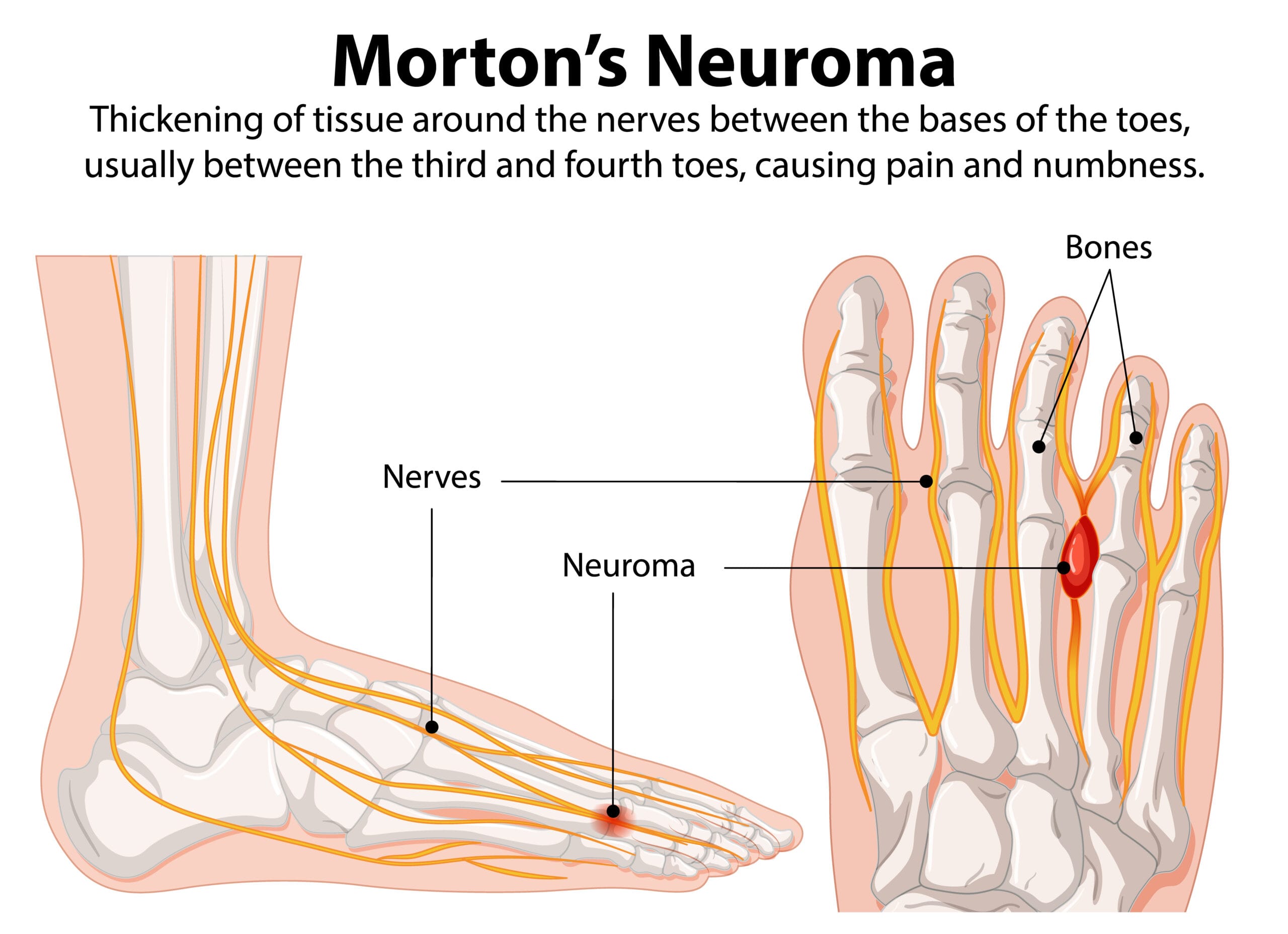
Morton’s Neuroma is a common yet painful foot condition that affects the ball of the foot, typically between the third and fourth toes. It occurs due to the thickening of tissue around a nerve leading to the toes, resulting in sharp, burning pain and discomfort. Many patients describe the sensation as feeling like they are standing on a small pebble or having a persistent irritation between their toes.
Causes of Morton’s Neuroma
Several factors contribute to the development of Morton’s Neuroma, including:
- Wearing tight or narrow shoes – Footwear such as high heels can compress the toes and irritate the nerve.
- Repetitive foot stress – Athletes and runners often experience increased pressure on the foot, which can lead to this condition.
- Abnormal foot mechanics – Conditions like flat feet, high arches, or other structural abnormalities may contribute to excessive nerve pressure.
Symptoms to Watch For
If you suspect you may have Morton’s Neuroma, be on the lookout for the following symptoms:
- Sharp, burning pain in the ball of the foot
- Numbness or tingling sensations in the toes
- The feeling of a lump or foreign object inside the ball of the foot
Treatment Options
Early intervention can help prevent the condition from worsening. Here are some common treatment options:
- Wearing wider shoes with a low heel to reduce pressure on the nerve
- Using orthotic inserts to provide proper arch support and relieve nerve compression
- Physical therapy and exercises to improve foot mechanics and reduce stress
- Corticosteroid injections or surgery in severe cases where conservative treatments do not provide relief
Understanding the Condition Through Visuals
A helpful diagram typically illustrates where Morton’s Neuroma develops—between the metatarsal bones—and shows how the nerve becomes compressed. This visual aid allows patients to better understand their pain and its underlying cause.
Find the Right Orthotics for You
Using the right orthotics can make a significant difference in relieving the pain and discomfort caused by Morton’s Neuroma. Explore our options:



By making the right footwear choices and using orthotics designed to support your foot structure, you can alleviate symptoms and prevent further complications. If you experience persistent foot pain, consult a podiatrist for a thorough evaluation and tailored treatment plan.